

Australia remains one of the world’s most sought-after destinations for skilled professionals, ambitious entrepreneurs, and families seeking safety, career progression, and an exceptional standard of living. Achieving Australian Permanent Residency (PR) is a major milestone that transforms your legal status, giving you the foundation to build a permanent home in Australia.
Whether you are currently exploring your migration options, waiting on a pending application, or holding a permanent visa, understanding the full scope of your PR entitlements—along with your ongoing travel obligations—is vital to protecting your future.
What is Australian Permanent Residency?
An Australian permanent resident is a non-citizen who has been granted a permanent visa under the Migration Act 1958. This status permits you to live, work, and study in Australia indefinitely without the restrictions or renewal pressures associated with temporary visa streams.
Key Takeaway:
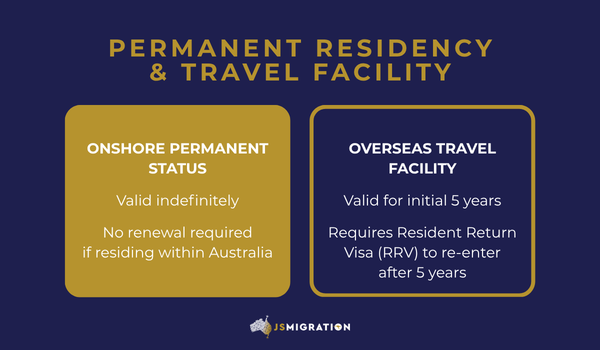
Permanent residency grants an indefinite right to remain inside Australia. However, the travel facility attached to your initial PR grant is generally valid for five years. Understanding this distinction is crucial if you plan to travel overseas.
Top 7 Key Benefits of Australian Permanent Residency
Live in Australia Indefinitely
The most foundational benefit of PR is security. Unlike temporary visa holders who must continually extend visas or satisfy employer conditions, permanent residents can remain in Australia indefinitely as long as their visa remains active and uncancelled.
Unrestricted Work Rights Across All Industries
Permanent residents have the freedom to work for almost any employer in Australia without restriction.
- No sponsorship ties to a single company.
- Full flexibility to change careers, launch a startup, or engage in freelance work.
- Equal protection under Australian labor and employment laws.
Enrolment in Australia’s Healthcare System (Medicare)
Eligible PR holders gain immediate access to Medicare, Australia’s world-renowned public healthcare scheme. This entitles you to:
- Free or subsidised medical care by general practitioners and specialists.
- Free treatment as a public patient in public hospitals.
- Access to cheaper prescription medicines under the Pharmaceutical Benefits Scheme (PBS).
Subsidised Higher Education & Domestic Fees
Higher education fees for international students in Australia can be substantial. As a permanent resident, you qualify for domestic student tuition rates at Australian universities and TAFE institutions, significantly lowering the cost of undergraduate and postgraduate study.
Ability to Sponsor Eligible Family Members
Permanent residents have the right to sponsor eligible family members—such as partners, children, and parents—for Australian migration, allowing loved ones to join you and build their future in Australia.
A Direct Pathway to Australian Citizenship
Permanent residency is the prerequisite step to obtaining an Australian passport. Once you meet the general residence requirements (typically living in Australia lawfully for 4 years, including at least 12 months as a permanent resident), you become eligible to apply for Australian Citizenship by conferral.
Access to Social Security Benefits
Subject to initial waiting periods (usually 2 to 4 years depending on the payment type), permanent residents may access Australian social safety nets, including income support and family subsidies delivered through Centrelink.
How Long Does Australian PR Last?
A common point of confusion among migrants is the relationship between permanent status and visa expiration.
- Right to live in Australia
- Duration: Infinite
- What happens when it expires: Does not expire as long as you stay within Australia.
- Initial Travel Facility
- 5 years
- What happens when it expires: You can leave and re-enter Australia freely during this window
- Post 5-year Overseas Travel
- Requires RRV
- What happens when it expires: You must hold a valid Resident Return Visa (RRV) to re-enter Australia.
Renewing Your Travel Facility: The Resident Return Visa (RRV)
When your initial 5-year travel facility expires, your permanent residency status remains intact while you remain onshore. However, if you plan to depart Australia and re-enter as a permanent resident, you must obtain a Resident Return Visa (Subclass 155 or 157) before returning.
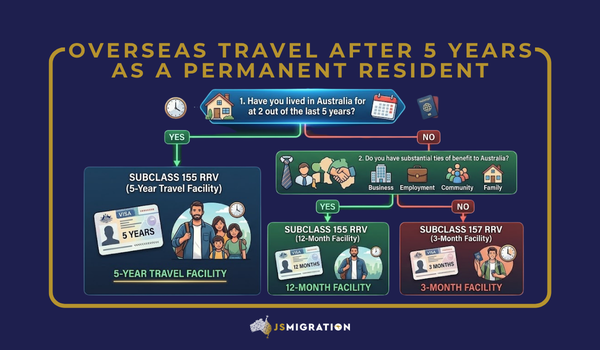
Resident Return Visa Options Breakdown
Subclass 155 (5-Year Travel Facility)
Requirement: Physical presence in Australia for at least 730 days (2 years) out of the last 5 years as a PR holder.
Subclass 155 (12-Month Travel Facility)
Requirement: If you have spent less than 2 years in Australia, you must prove substantial business, employment, cultural, or personal ties that benefit Australia.
Subclass 157 (3-Month Travel Facility)
Requirement: Granted in limited circumstances where an applicant spent at least 1 day in the past 5 years in Australia and presents compelling and compassionate reasons for departing or remaining overseas.
Can You Lose Australian Permanent Residency?
While Australian PR provides long-term peace of mind, it is not unconditional. Your PR status can be lost under specific legal circumstances:
- Travelling Overseas Without a Valid Travel FacilityDeparting Australia after your 5-year travel facility expires without obtaining an RRV means you cannot re-enter as a permanent resident. Entering on a temporary visa (such as a visitor visa) can automatically override your permanent status.
- Character-Based Visa Cancellation (Section 501)Under Australian migration law, the Minister or Department holds powers to cancel permanent visas on character grounds—particularly involving criminal convictions resulting in custodial sentences.
- Providing False or Misleading Information (PIC 4020)If Home Affairs discovers that PR was granted based on fraudulent documentation or false claims, visa cancellation proceedings may be initiated.
Frequently Asked Questions (FAQ)
Does Australian PR automatically expire after 5 years?
No. Your permanent residency does not expire, but the travel facility that permits re-entry into Australia does. You only need an RRV if you plan to travel internationally and return.
Can I stay in Australia indefinitely without applying for an RRV?
Yes. If you stay inside Australia, you can continue living, working, and studying indefinitely without applying for a Resident Return Visa.
What happens if I am overseas when my travel facility expires?
You will be unable to board a flight back to Australia as a permanent resident. You must lodge an online Resident Return Visa application and wait for approval before traveling back.
Is Australian PR the same as Citizenship?
No. Permanent residents hold foreign passports, cannot vote in Australian federal elections, and must maintain travel facilities. Citizens hold Australian passports, have unconditional re-entry rights, and enjoy full civic privileges.
Navigating permanent residency rules and travel facilities requires proactive planning. If you are preparing an initial PR application, seeking advice on your 5-year RRV eligibility, or resolving complex travel ties, our team provides expert, high-integrity legal support tailored to your goals. Contact JS Migration today to schedule a consultation and secure your future in Australia.