
News
Australia’s health and aged care sector is under immense pressure — and overseas talent is more vital than ever. With a rapidly ageing population, increasing demand for care, and widespread workforce shortages, both skilled migrants seeking careers and employers needing staff have a unique opportunity.
In this article, we highlight the top roles in demand, the scope and urgency of the shortage, and provide practical guidance for migrants and Australian employers on how to navigate the current landscape.
Why Health & Aged Care Is a Critical Priority
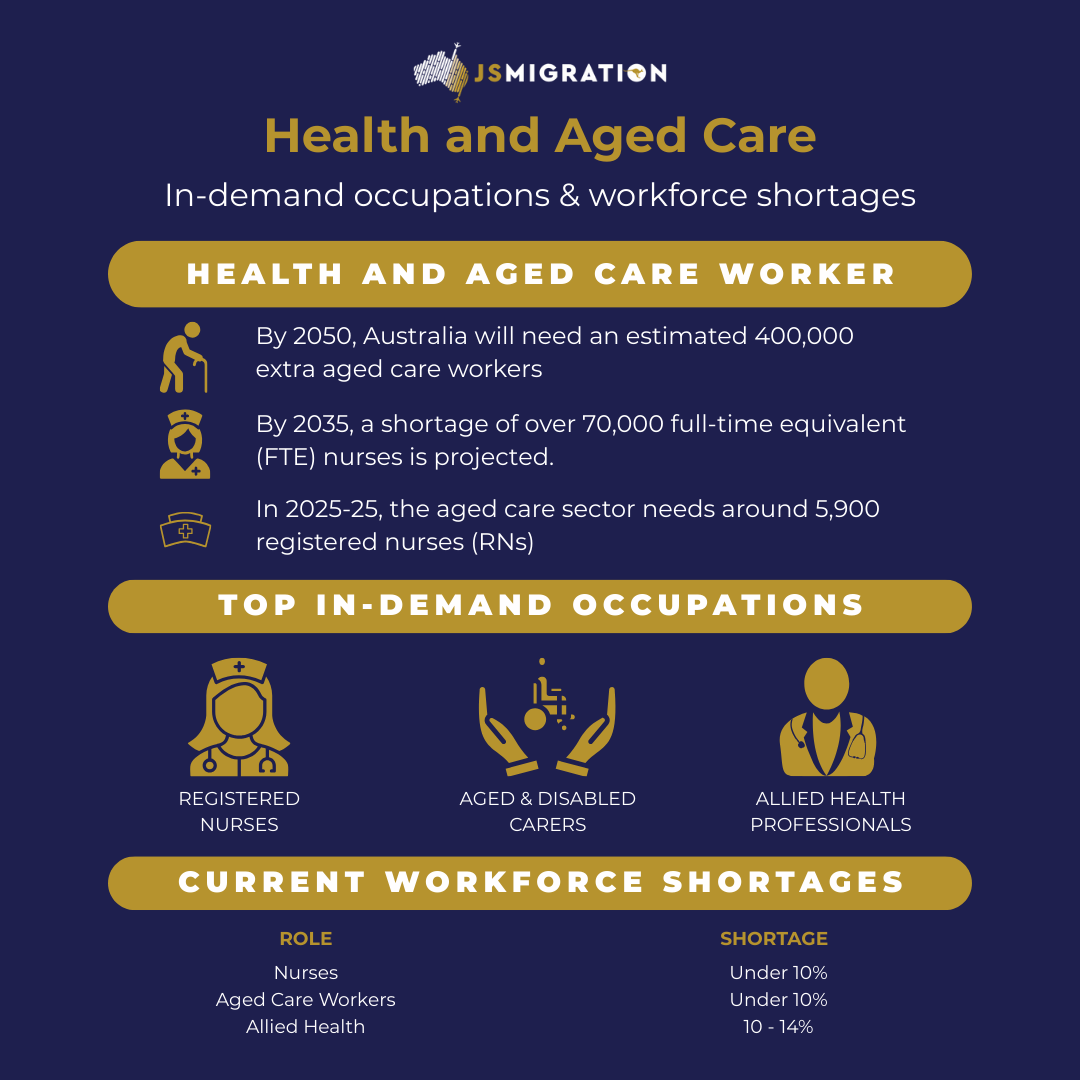
The demand for aged care and health services in Australia is rising sharply due to demographic shifts. Projections show that by 2050, the country will need an additional 400,000 aged care workers to meet growing demand for residential and home‑based care.
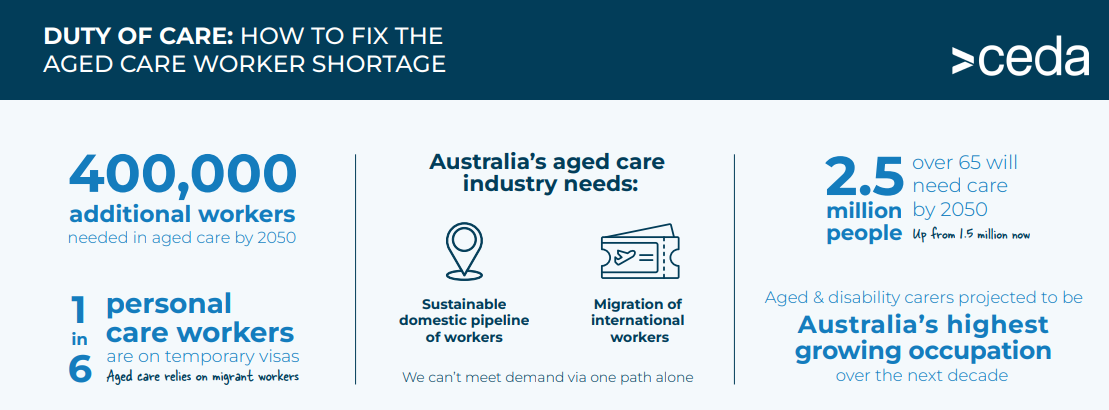
Source: www.ceda.com.au | Duty of Care: How to Fix the Aged Care Worker Shortage 2025
Workforce modelling suggests that by 2035, there will be a substantial shortfall of nurses — estimates indicate Australia could face a shortage of more than 70,000 full-time equivalent (FTE) nurse roles. For the 2024–25 period alone, the aged‑care sector reportedly needs around 5,900 registered nurses (RNs) to fill current gaps in residential aged care.
Despite some easing in labour shortages overall, demand remains acute in health, aged care, and allied health occupations. The shortage is especially severe in regional and rural areas, where recruitment and retention are harder, but demand for services is growing equally. In short: supply is not keeping up with demand — and as Australia ages, this gap is only expected to widen.
Skilled Migrants: Why Health & Aged Care Offers Real Opportunity
For internationally‑trained health or care professionals, the current environment in Australia offers a compelling entry point. Here’s why and how you can take advantage:
High‑Demand Occupations
Some of the roles in greatest demand:
- Registered Nurses (RNs) — especially those with experience or willingness to work in aged care, aged‑care residential homes, or home‑based care.
- Aged & Disabled Carers / Personal Care Workers — demand for carers remains high as aged care demand surges and the local labour supply lags.
- Allied Health Professionals — physiotherapists, occupational therapists, community health workers and similar allied‑care roles are also increasingly needed, particularly in under-served regional areas.
Visa & Migration Pathways
Given persistent shortages, Australia remains open to overseas applicants to fill critical health roles. For qualified migrants, key pathways often include:
- Employer‑sponsored visas (for those who secure a job offer), especially for nursing and care roles.
- State‑ or territory‑nominated skilled‑migration visas — some states give priority to health and aged‑care occupations.
- Roles in aged care or allied health may also qualify for relevant skilled occupation lists, depending on demand and required credentials.
What Migrants Should Do to Prepare
If you’re considering migrating to Australia to work in health or aged care:
- Obtain relevant credentials and credentials assessment — ensure your degree or qualification meets Australian standards. Many employers will only consider internationally qualified candidates who have had their credentials assessed.
- Highlight experience & specialization — RNs with aged‑care, geriatric, home‑care, or community care experience are especially sought after.
- Be open to location flexibility — while metro areas have competition, regional or remote areas often offer higher demand, easier placement, and potentially faster pathways for visa sponsorship or permanent residency.
- Prepare for registration/licensing requirements — Australia may require registration via its national nursing or health practitioner boards before you can work.
- Craft a strong, recruiter‑ready CV and gather references — employers are under pressure to fill roles quickly; having credentials, references, and readiness to start can boost your chances significantly.
Bottom line for migrants: If you’re qualified, experienced, and flexible, now is an excellent time to consider migrating to Australia’s health and aged care sector. Demand is strong, and pathways remain accessible.
Employers: How to Address Workforce Gaps via Overseas Recruitment
For aged-care providers, hospitals, clinics, and community health services — the shortage of locally available staff poses real risks to service quality, compliance, and long‑term sustainability. Overseas recruitment and sponsorship can be a viable solution.
Why Overseas Recruitment Makes Sense
- Local supply of nurses and carers is not keeping pace with demand, especially in aged care and regional areas.
- Relying solely on domestic labour may result in unfilled vacancies, overworked staff, high turnover, and inability to meet required care standards (e.g. mandated RN care-minutes, 24/7 coverage in facilities).
- Overseas-trained professionals often bring critical skills, flexibility, and willingness to work in under-served roles (e.g. personal care, community care, regional placements), helping providers meet care demands.
Sponsorship & Hiring Options for Employers
Employers considering hiring internationally can explore:
- Sponsoring qualified overseas nurses or carers — with employment offers, subject to immigration and registration requirements.
- Working with migration agents or recruitment specialists to handle visa applications, skills assessments, credential verification, and compliance with regulation.
- Targeting regional or high‑need areas where demand and shortage are higher — often easier to secure sponsorship and offer competitive packages.
- Structured onboarding and support — assisting overseas hires with credentialing, registration, orientation to Australian standards, and community integration to improve retention.
Employer “Checklist” for Recruitment & Sponsorship
Before recruiting overseas care workers, providers should:
- Audit workforce needs — identify roles most urgently in shortage (e.g. RNs, personal carers, allied health).
- Ensure compliance with care standards — many aged care regulations now require 24/7 RN availability and minimum direct‑care minutes per resident.
- Plan for credential assessment & registration — ensure that overseas candidates meet Australian regulatory standards (licensing, skills check, possibly bridging courses).
- Provide support for orientation and retention — cultural onboarding, mentoring, career progression paths, and local support to reduce turnover.
- Consider strategic workforce planning — combine overseas hiring with domestic recruitment (e.g. trainees, apprenticeships) to build a stable, diverse workforce for the long term.
Bottom line for employers: Overseas recruitment is not just a short-term fix — when done right, it’s a strategic investment in capacity, compliance, and sustainable service delivery.
What This Means for the Future
- The demand for health and aged care workers will only multiply as Australia’s population ages. Without significant workforce growth, gaps will widen — especially in rural and regional areas.
- Employers who proactively recruit and sponsor overseas workers are likely to gain a significant advantage — ensuring they can meet care standards and maintain service quality.
- Skilled migrants with healthcare qualifications stand to benefit: demand remains high, pathways are open, and chances of securing employment and visa sponsorship are greater than in many other sectors.
- Regional placement, flexibility, and willingness to work in aged care or allied health significantly increase the odds of success — for both migrants and employers.
What You Should Do Next
For Migrants: If you have healthcare or caregiving qualifications — especially in nursing, aged care, or allied health — now is a strategic time to consider migrating to Australia. Start by assessing your credentials, preparing your documentation, and targeting roles and regions with high demand.
For Employers: Don’t wait until shortages cripple your services. Audit your staffing needs now, identify which roles are hardest to fill, and explore overseas recruitment and sponsorship as a forward-looking solution.
Opportunities are here — don’t wait. If this feels like your moment, let’s talk about how to make it real.
POSTED: 05 Dec, 2025
View all news